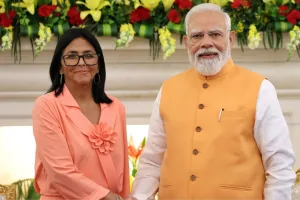
Perfect complementarity exists between India and Venezuela to work in energy sector: MEA
Amid the West Asia crisis, the two countries discussed energy security and explored ways to strengthen bilateral cooperation.
Government introduces a revised LPG distribution system with capped supply and sector prioritisation, while pushing industries and states to shift towards piped natural gas and cleaner alternatives.





Rows of LPG cylinders inside a distribution facility | IANS
The Centre on Wednesday rolled out a revised system for distributing LPG to industries, seeking to cushion critical sectors from any disruption linked to the ongoing tensions in the Middle East.
The move comes as concerns grow over global energy supplies. The government has picked sectors like pharmaceuticals, food processing, and agriculture as the ones that simply cannot afford a disruption, and is making sure they get fuel first.
Advertisement
The oil ministry said the revised policy will cover a wide range of industries, from pharma and food to polymers, packaging, paints, steel, ceramics, glass and aerosols. These are the sectors that keep factories running and everyday supplies moving, so keeping them going is a priority.
Advertisement
Under the new system, companies will be eligible to receive up to 70 per cent of their LPG usage recorded before March 2026. At the same time, the total supply for the entire sector has been restricted to 0.2 thousand metric tonnes per day.
Priority has been clearly defined. Units that do not have the option of switching to natural gas will be served first, ensuring that production in such facilities continues without interruption.
Alongside this, industries have been directed to register with oil marketing companies and seek piped natural gas connections through city gas distributors. However, this condition will not apply to units where LPG is integral to the manufacturing process and cannot be replaced.
The Centre has also distributed 70 per cent of packaged non-domestic LPG among states. A further 10 per cent allocation will be linked to reforms, particularly steps taken by states to promote PNG usage.
States have been asked to circulate the Natural Gas and Petroleum Products Distribution Order 2026 across departments, make use of reform-linked allocations, and fast-track policies related to compressed biogas.
Separately, the ministry flagged a surge in demand for smaller LPG cylinders. Since March 23, nearly 7.8 lakh 5-kg cylinders have been sold nationwide. On one day earlier this week, sales crossed 1.06 lakh units, higher than the February daily average of around 77,000.
Advertisement